Reflection Statement
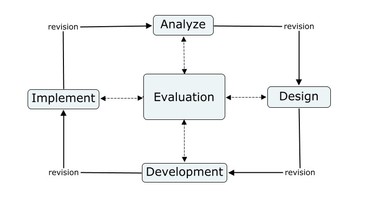
I encountered the term "ADDIE" for the first time when I was looking through various job openings that included education and curriculum in the description - all before I even joined the IDD program. I remember looking up the meaning of ADDIE and thinking it appeared to be a quite intuitive yet clunky process for teaching. However, since completing a deeper study in instructional design through the IDD program, I realize the integrated complexity of foundation, analysis, design, development, implementation, and evaluation. If I had to pick two areas in which I focused most I would say it was analysis and development.
|
Analysis
One of the most profound takeaways from my experience with different projects and tasks in the courses has been the emphasis on ensuring that a need for instruction exists before continuing further in the instructional design process. While the it may be hard to hear, it is absolutely necessary - when the data shows it - to say "no, instruction is not the solution to this issue". I believe in evaluating the symptoms within a context, verifying the problem needs, and determining the gap(s) that instruction could fill. When my group for 6210 (Learning Environments II) conducted a thorough needs analysis the results demonstrated - beyond a shadow of doubt - the need for instruction. This concrete analysis made me feel very confident about the development and implementation that we were completing because I knew that the need was valid. This theme fits my professional goals because in order to provide meaningful instruction I must first know if instruction is the solution and know the context and audience in which to tailor the instruction. |
Development
While one of my goals during the IDD program was to gain skills in design, I have chosen development because it is the materialization of design skills. Curriculum mapping is a very important step in determining the organization of instruction. However, I have really enjoyed being able to develop what has been planned because I envision myself as a potential learner and try to develop materials that I would want if I were the student. Development requires a lot of concurrent macro and micro thinking, which is a skill that I utilize frequently professionally. Learning specific skills in development tools - including Articulate Storyline, Audacity, Adobe Photoshop, and iMovie - has been a part of the IDD program that has situated me for a career in corporate instructional design because companies require some mastery before being hired. |
Professional Development
The IDD@UGA conferences were some of the most helpful professional development and networking opportunities I was afforded in fulfilling my goals. The conferences helped me practice showcasing my work, including answering questions and receiving critical feedback. I also participated in a Tech & Learning Live event in Atlanta in February 2016 where I was able to network with K-12 technology coaches, including a special invitation lunch where we discussed the future of personalized learning and technology. When I attended the Harvard Learning Environments For Tomorrow conference in May 2016 it reinforced my desire to continue to study learning space design after I complete my master's degree.
The IDD@UGA conferences were some of the most helpful professional development and networking opportunities I was afforded in fulfilling my goals. The conferences helped me practice showcasing my work, including answering questions and receiving critical feedback. I also participated in a Tech & Learning Live event in Atlanta in February 2016 where I was able to network with K-12 technology coaches, including a special invitation lunch where we discussed the future of personalized learning and technology. When I attended the Harvard Learning Environments For Tomorrow conference in May 2016 it reinforced my desire to continue to study learning space design after I complete my master's degree.